
The 39 Steps
- May 8, 2020
- 2 min read
Updated: May 9, 2020
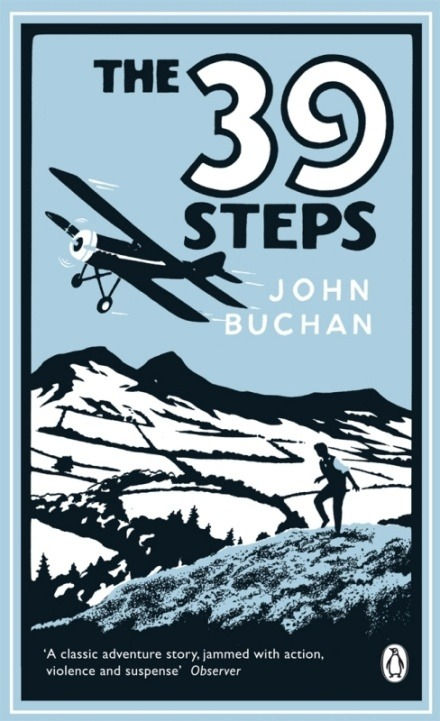
‘The 39 Steps’: John Buchan – a step too far? John Buchan’s ‘The 39 Steps’ is best approached with forbearance - and a sense of humour. Its content and tone dictated by the era in which it was written, the book was to inspire future spy thrillers by Ian Fleming, Graham Green, John Le Carré and more. Buchan asserted he was attempting to imitate the American ‘dime’ novel, where “incidents defy probabilities and march just within the borders of the possible”. Certainly, the action in the ‘The 39 Steps’ doesn’t bear much scrutiny.
Published in 1915, just after the outbreak of the First World War, ‘The 39 Steps’ introduces us for the first time to ex-Rhodesian mining engineer and ex-Boer war spy, Richard Hannay. It’s a real Boys’ Own Adventure, sending our hero on a wild goose chase from London up to the west of Scotland, pursued by the Black Stone, a gang of three intent on kick-starting war in Europe. It would appeal to any young red-blooded male of the time, with car chases, ‘plane pursuits, conspiracy theories, all seasoned with a dash of British patriotism.
This far-fetched adventure thriller of derring-do is structured in a series of set pieces, in which Hannay, appropriately disguised, manages to out-wit his pursuers. After returning to London and thence to the Kent seaside town with the 39 steps, the chase ends in anti-climax, with a final throw-away line. To present day readers, more used to a pared down style, the writing seems melodramatic; the derogatory comments about Jews and ‘low Scots’ offensive to modern sensibilities; the scant references to women, except as food-providers, bordering on sexism. But that’s to judge from the standpoint of the 21st. century, rather than the start of the 20th. century. They did things differently then. On the positive side, there were amusing details: the necessity of wearing an “ulster” before embarking on a journey; Hannay’s ability to twirl a cut-throat dagger and catch it between his lips; hilarious advice from an Afrikaans scout on how spies can melt into any background. Archaic terminology speaks of the story’s era, when Liberal party members were called Whigs; matches were Vestas; and Hannay could accurately describe himself as “a colonial”, for Britain had colonies then. Finally, the reaction from most of the Giffordtown Reading Group members was disappointment, especially from those who had either read ‘The 39 Steps’ when young, or seen the eponymous Alfred Hitchcock film. For this reviewer, who saw the 2008 BBC TV version, starring Spooks’ star, Rupert Penry-Jones - which was panned by critics - the book was much as she had expected.
April's book - a randomly chosen one from Fife Council Services' list for reading groups - is "My Dear, I wanted to tell you" by Louisa Young. Handkerchiefs at the ready?
Monique Sanders.


Comments